

Welcome to the Journal
This is our reflective space where we share seasonal insights, embodied thoughts, and writing rooted in lived experience and rhythm. Entries are written slowly, honestly, and for reflection rather than performance.
This space is not a blog in the traditional sense. It is a slow reflective practice for those who feel called to slow down, sit with words, and move in rhythm rather than rush. Read at your pace.


Coping with Sundowning: Strategies for Supporting People with Dementia in the Evening
Dementia is a progressive neurological disorder that affects millions of people worldwide. It can cause memory loss, difficulty communicating, and changes in mood and behavior. For some people with dementia, evenings can be particularly challenging. This phenomenon, known as "sundowning," can be distressing for both patients and their caregivers. In this article, we'll explore why evenings can be harder on people with dementia and how to cope with sundowning.
Sundowning is a term used to describe a pattern of behavior in which people with dementia become more confused, agitated, or even hallucinate as the sun sets. While the exact cause of sundowning is unknown, it is believed to be related to changes in the body's internal clock that occur with aging and dementia. As the sun sets and the natural light begins to fade, patients may become disoriented and have trouble distinguishing between night and day.

Inspired by the powerful biblical verses John 10:34 and Psalms 82:6, the “Ye Are Gods” Embroidered Beanie serves as a bold reminder of your inner divinity. Featuring an embroidered design that reflects the message “Ye are gods”, this hat encourages you to tap into the power within and embody the strength of the Most High.
Crafted for those on a spiritual journey, this piece is more than just fashion—it’s a declaration of self-empowerment and divine potential. Whether you're reflecting on your path or simply out and about, the “Ye Are Gods” beanie is a wearable affirmation of your higher purpose.
Elevate your style and spirit with the Noble Alkhemy “Ye Are Gods” Beanie—a perfect fusion of faith, empowerment, and contemporary fashion.
The perfect beanie has arrived! This embroidered beauty has a snug fit that ensures you're going to feel cozy and warm whatever you're doing.
• 60% cotton, 40% acrylic
• Breathable cotton blend
• Form-fitting shape
• One size fits most
Featured Products

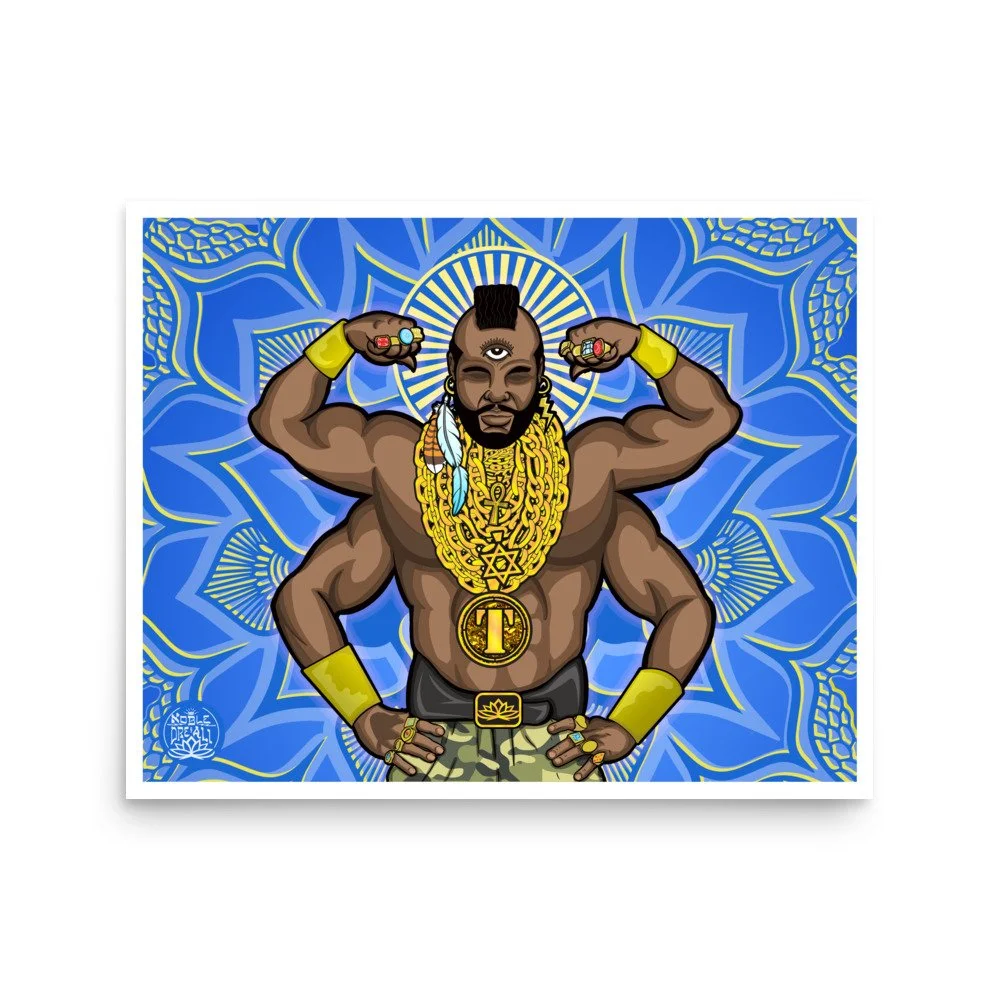

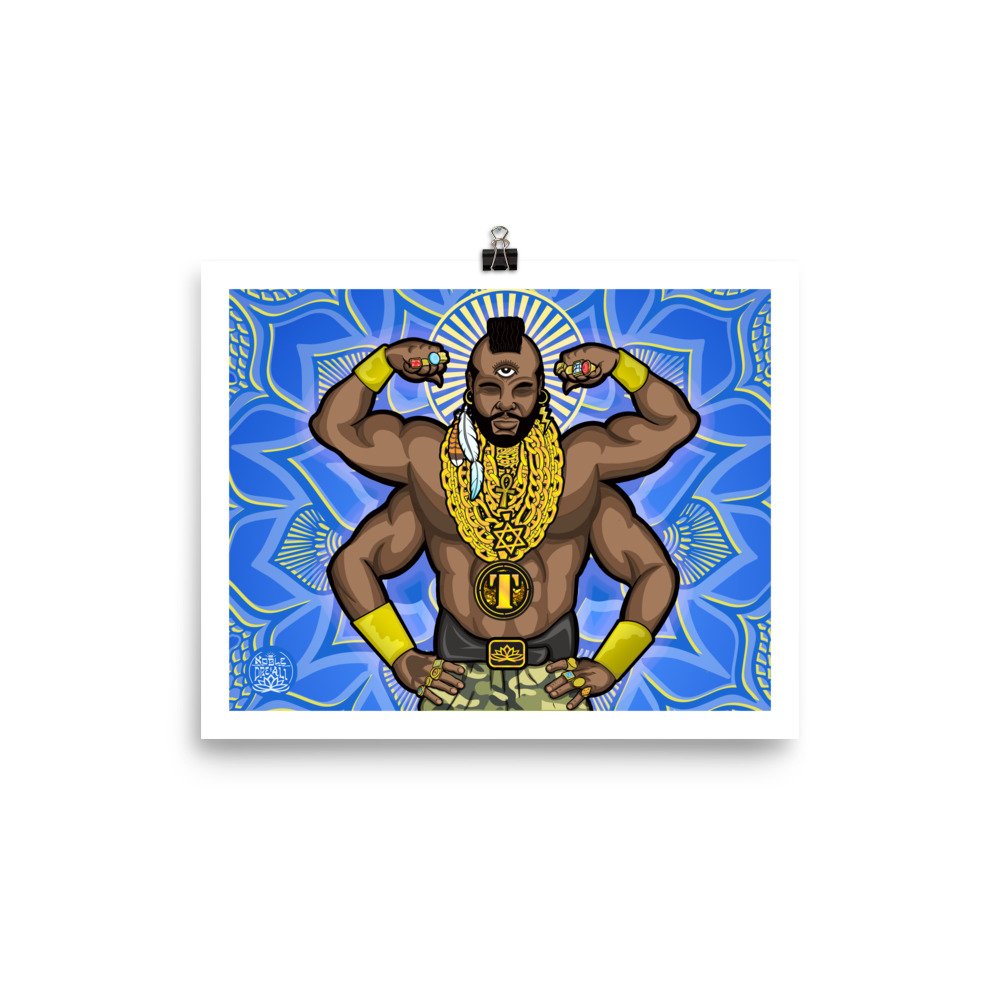
Introducing "Pity the Fool," a stunning and vibrant art print that reimagines the legendary 1980's icon, Mr. T, as a mythological and afro-futuristic marvel. In this stunning artwork, Mr. T is depicted as a four-armed deity, adorned with his signature gold chains and sporting a powerful third eye that allows him to see clearly in all situations.
The intricate and colorful mandala design adds an extra layer of depth to this already powerful artwork, making it a truly unique addition to any home or office. "Pity the Fool" is not only a stunning work of art, but it's also a powerful reminder to stay fit, keep your spiritual well-being a priority, and to have pity for those who don't know better.
This is digitally printed on Museum-quality posters made on thick and durable matte paper., ensuring that the vibrant colors and intricate details of the design are captured in stunning detail. The print is available in several sizes, making it a versatile piece that can be used to enhance any space.
Add some afro-futuristic style and inspiration to your home or office with "Pity the Fool," a truly unique and inspiring piece of art.
• Paper thickness: 10.3 mil
• Paper weight: 5.57 oz/y² (189 g/m²)
• Giclée printing quality
• Opacity: 94%
• ISO brightness: 104%
This product is made especially for you as soon as you place an order, which is why it takes us a bit longer to deliver it to you. Making products on demand instead of in bulk helps reduce overproduction, so thank you for making thoughtful purchasing decisions!